'Theatre of the Oppressed': Exploring Augusto Boal
Primarily, the first thing that we did in this session was creating our own definition of oppression. Mine was:
"The idea that someone is treated less equally by the higher establishment because of social factors like their social background, ethnicity, gender etc".
Everyone had various different definitions. Technically, the google definition for oppression is:

Yet the discussion that came to light and that I thought about for a while is how subjective oppression is. So while that Google definition is the objective statement for what oppression is, the different types of systematic and subtle oppression are relative to different people and communities dependent on their situation and experiences. This was evoked by the difference in everyone's definition, although they all had the same gist. Similarly, everyone experiences different types of oppression based on their life experience and background so the experience of oppression to one person will never be the same to another's. This is why Boal's idea of forum theatre, for me, is so important because it allows lots of people from different backgrounds and with different experiences to come together, unite, and become 'spect-actors' also debating and bringing about a solution for social issues. This means that oppression is overall fought against through the integration of people who hold differences, and for me this is the importance of theatre.
'Unpacking the Meaning of Oppression' - a Ted Talk by Ayesha Haq
This TED Talk is very interesting since it comes from the viewpoint from someone who in today's day and age is extremely oppressed. It suggests the differences in how people view oppression, and the 'incomplete' differences of oppression.
This article discusses how the extent to which we as a society are outraged by certain issues has been escalated by the use of social media and the media in general, which has almost made us desensitised to cases of genuine oppression. This accentuates the need for theatre to be active in discussing raw forms of oppression. This article is also relevant to this discussion though because it discusses the different layers of subjectivity in how people view oppression: some people might be more outraged by animal battery farming over #BlackLivesMatter.
Hence, on this topic, in class we used some of Boal's techniques to get an insight into how he united communities in Brazil to fight against oppression and inequality, using the basis of 'what is oppression?' as a starting point.
Columbian Hypnosis is an exercise that gave me an insight into the oppressed VS the oppresser, and the relationship the two might have.
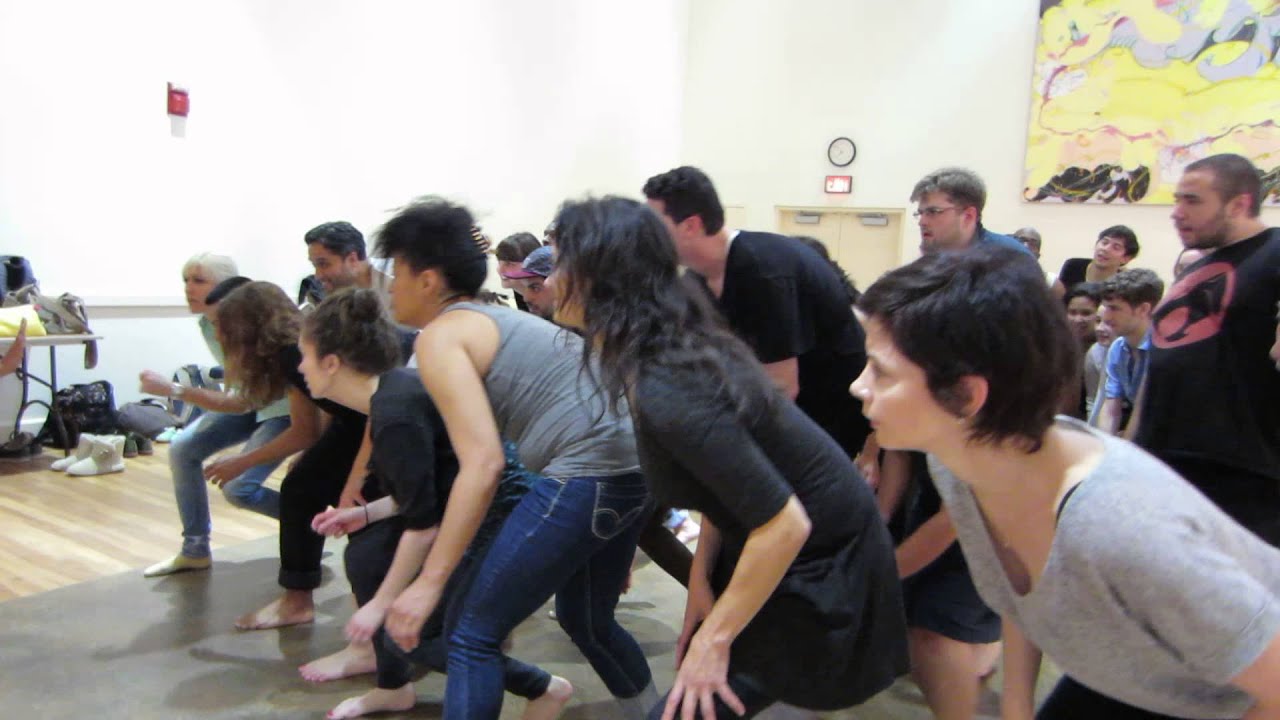
The columbian hypnosis was a technique developed by Boal and involves groups dividing into two pairs, one choosing A and the other choosing B. A hypnotises B with their hand and B must keep their face just a few inches from A's hand at all times - always an equal distance. A should try to manipulate B into all sorts of positions using forgotten muscles to use their body in a different way. A and B swap around.
Initially, I did this with Monique and it felt incredibly strange, and also made me and the rest og the group ponder the different feelings on either side of the spectrum: the oppresser and the oppressed. It was interesting to see how everyone had different feelings regarding the two different positions, which echoes the idea of subjectivity when it comes to oppression. Personally, I really enjoyed being the oppresser who hypnotises the other person. It felt quite easy and it sort of put me on a high of feeling incredibly powerful. As a result, I got more cheeky throughout the exercise since the more power I gained, the more power hungry I got so my partner was being more manipulated by more crazy positions. On the flip side, being hypnotised was quite frustrating. I felt this incessant need to really commit to the exercise despite the fact that I felt I was being worked out quite a bit and felt really tired. After a while however, I found it a lot easier, and felt myself throwing myself into it more, almost as though I eased into the position of being the oppressed and following someone else's command. It evoked the idea of being a cog in a machine to me. When you're oppressed, you're powerless and can often just ease into the situation you're in under the power of someone else, feeling disassociated and passive. It didn't take much to almost switch off.

Furthermore, the next step of the exercise involved the whole group in which an entire group moves around the group, hypnotised, all connected to one central oppresser or hypnotiser. That one person moves around slowly and the group follow. This segment was so much more frustrating, probably down to the fact that I was one of the people with lower status during the exercise and was on the outside and as a result I felt I had to work a lot harder than those in the middle. For example, if the central hypnotiser made one slight movement, the whole group would have to move and run around to ensure that the rules of the exercise were being followed. This was a lot more strenuous and evoked feelings of being tired and fed up for me. To me, this echoes the idea of how much the people in society have on those who have power - the reliance they have on the state to dictate their lives, and how passive this can make them, as well as the idea that the smallest change from the top can have immense ripple effects on the people in the bottom of the social structure, sometimes to the ignorance of those at the top living in their own bubble.
This exercise was incredibly helpful in exploring the idea of oppression and the various connotations of that and it is so understandable to me that Boal used this technique in communities and as part of 'Theatre of the Oppressed'.
This exercise was incredibly helpful in exploring the idea of oppression and the various connotations of that and it is so understandable to me that Boal used this technique in communities and as part of 'Theatre of the Oppressed'.
The next aspect of Boal's ideas that we explored was forum theatre. Forum theatre was developed in Latin America as a means to tackle the overriding problems affecting the lives of ordinary people, provoking discussion and debate.

In correlation with the idea of 'oppression', as a group we were asked to visually demonstrate a depiction of oppression using just chairs that were in the room as individuals. Although I didn't have a go, I found other people's images quite frustrating since they were very different to my idea of what I would visually represent, exemplifying the idea of subjectivity around this idea. What was useful about this exercise is because of the differences' in the group, it provoked a lot of discussion and debate which served the purpose of forum theatre, although we never came to a finalised consensus on one right image. Perhaps that is because there is no one right image when it comes to people's ideas of oppression: everyone will always have a different idea dependent on their life experience.
In the next stage of this exercise exploring Boal, we got into groups and created visual tableaus that we believed represented the definition of one type of oppression. For example, my group decided to represent 'sexism' in a visual tableau. We had to take turns to be the sculpters of the image, and this meant that as each of us were swapped out to form and change the image, it naturally evolved and became something very different (through subtle changes) than what it was when the sculpting begun.
The image I tried to represent of sexism, since I was the first sculpter in my group, was shown through physical barriers imposed by females onto females, and then males onto the females. I wanted to represent the social structures in society that means that patriarchy is maintained, and this often involves the oppression of women imposed by other women in higher positions, who are overall oppressed by males who impose patriarchy. However, since I hadn't discussed this with my group, it was interesting how this strong image almost changed after because everyone had varying definitions and experiences of the word 'sexism'. While this was frustrating, it allowed me to be very open minded towards everyone's experiences, and in a way this justified the merit of forum theatre since you find commonality with those around you. Nevertheless, sculpting felt really liberating to me since I felt I could visually represent something I felt passionate about.



No comments:
Post a Comment