Community Theatre Companies
This week, our group has conducted research into various community theatre companies who target their work towards a particular social cause, often involving people who are marginalised by society. We presented our findings to the group and in turn developed an embedded knowledge of these various companies. This research has been so inspiring for me as someone who wants to make theatre since it has highlighted to me the impact that theatre can have on people, for example the groundbreaking research 'Age Exchange' has shown and its effect on people living with dementia is something that really resonated with me, as that can have such an immense impact on people's lives.
1) CLEAN BREAK: 'A woman's theatre company changing lives and changing minds - on stage, in prison and in the community'
Clean Break: The theatre company telling the story of women in prison
http://www.cleanbreak.org.uk/ - website
A writer who was commissioned to write for Clean Break talking about a piece created for Latitude Festival, 'Sweatbox'.
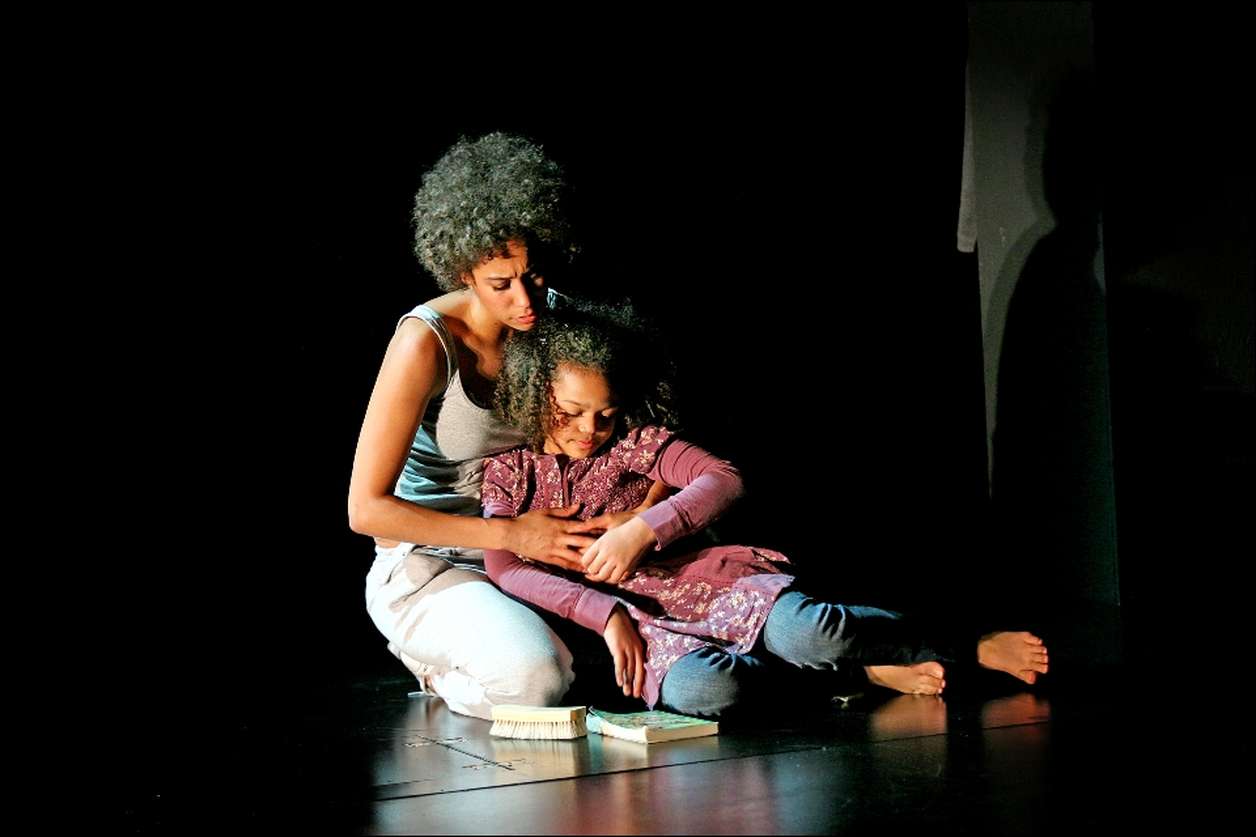

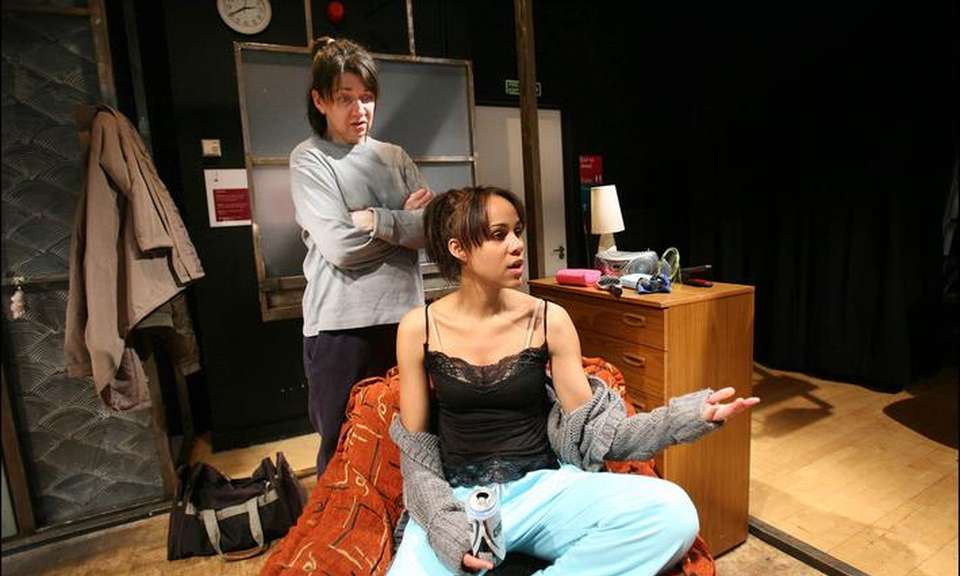
- Clean Break was set up in 1979 by two women prisoners: Jenny Hicks and Jackie Holborough with the belief that theatre could bring the hidden stories of imprisoned women to a wider audience.
- Jenny and Jackie met in the exercise yard and started rehearsing Jesus Christ Superstar, but the prison government put a stop to the spectacle. They met again at Ashkams Grange Open Prison where they expanded the annual Christmas show to a theatre workshop and then a troupe. Their first show was a 2 hour play called Efemera, played first at prison, and then it was eventually taken to York Arts Centre and then the Goodricke College at the University of York. This was under agreement from the Home Offrice that the group would only be allowed to play outside of prison as long as they didn't advertise themselves as serving prisoners.
- They were the first 21 strong group of British prisoners to perform outside of prison.
- When they were released, they decided to launch Clean Break as a workshop and toruing company open to all interested women ex offenders as a support group and means for developing skills and discovering a voice for themselves through theatre.
- Their base was initially in Camden, but it is now based in Kentish Town.
- In the first seven years of the company's creation, they were self financed, working with box office splits and charity grants, and then the Greater London Council and then the Arts Council.
- The company toured in the UK, Europe and the US, playing to a variety of audiences including mainstream theatres, community centres, art institutions, conferences, educational establishments and local groups.
- Their first few shows consisted of 'A Question of Habit' and 'Under Eros' to name a couple - it was after a reading at the Royal Court however that the company policy emerged to launch an after discussion with the audience. Some of the shows that came after were Avenues (1981), Decade (1984), The Goal Life and the Easter Egg.
- The company also undertakes workshops with young ofeners, participates in service training schemes for prison staff and probation officers and performs regularly in educational establishments. This is coordinated through the educational/training branch of the company, which particularly seeks to work with ex offenders to develop personal, social, professional and creative skills, in order to gain education/employment. Another integral branch of the company is the writing/production aspect, which works with the principle to entertain and enlighten audiences about the complex problems women face in the criminal justice system. Finally, Clean Break also has an outreach network where outreach teams work in prisons with wardens and staff within the criminal justice system.
- Clean Break's vision consists of using theatre to keep the subject of how women are treated in prison/under the criminal justice system on the cultural radar, helping to reveal the damage caused by the failures of the criminal justice system.
- Their women only identity is key to their rationale. Treatment of women in the crimianl justice system is one of the clearest demonstrations that society is unequal and that women are judged by different standards to men. Most female offenders have experienced male violence and are victims of crime but are twice as likely as men to be sent to prison. Clean Break wants to challenge these as well as the stigma around offenders.
2) LONDON PLAYBACK THEATRE: spontaenous, improvised community theatre
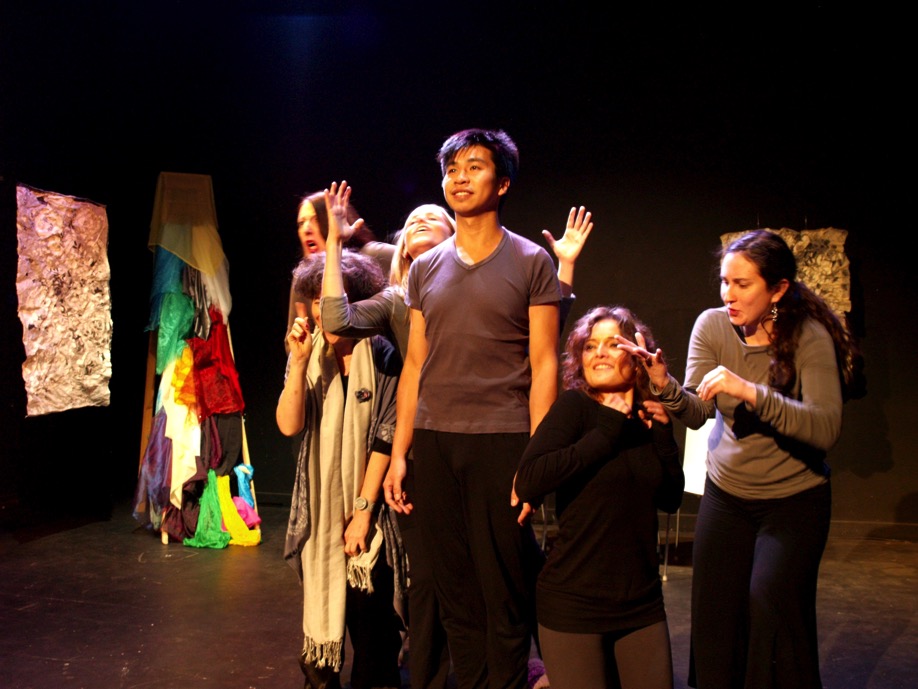
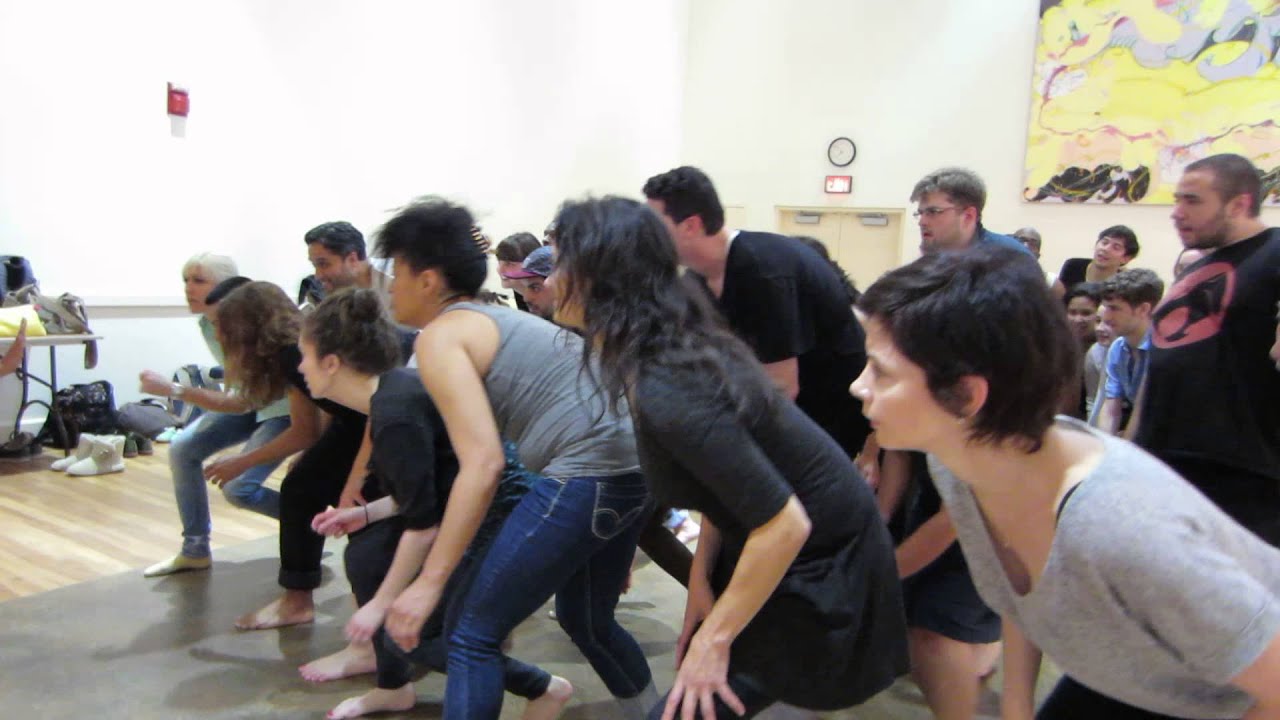
- The London Playback Theatre creates spontaenous, improvised theatre through a unique collaboration between performers and audiences, responding the people's stories using the audience. This creates a unique improvised experience in a range of public places. The rules dictate that this should be done in large groups to establish a sense of eventual unity and empowerment.
- The group tell eachother stories and through the magic of theatre, they bring those stories to life. They tell stories with a variety of techniques, whether this is song, dance or cloth, and usually have follow up workshops, after stories and improvisations.
- The people who facilitate this work are practitioners, educators, therapists and consultants, making it a safe place where anyone can tell a story.
- They believe in changing the dynamic between the actor and the audience as participants are directly involved and encouraged to tell their stories and experiences. This helps deepen the understanding of the participants' selves and the people around them, creating authentic and life changing experiences.
- There are regular Playback gatherings and festivals in different parts of the world, including in Finland, the UK, Italy, Germany, Eastern Europe, Israel, Hong Kong, Nepal and India. Playback North America, a network of playback companies in North America, has held several conferences. The International Playback Theatre Network (IPTN) holds a conference every four years in different parts of the world. ITN conferences have taken place in Sydney, Australia (1992), in a village north of Helsinki, Finland (1993), Christchurch, New Zealand (1994), in Olympia, Washington, USA (1995), Perth, Australia (1997), York, England (1999), Shizuoka, Japan (2003), São Paulo, Brazil (2007), Frankfurt, Germany (2011), Montreal, Canada (2015). The next international conference will be held in Bangalore, India, in December 2019.
3) SYNERGY THEATRE PROJECT works towards rehabilitation with prisons and ex-offenders


- Synergy was established in 1999, and it works towards the rehabilitation and reesetablishment of offenders through theatre, believing that the power of theatre is transformative and can change perceptions. They like working in non traditional venues, and like transforming prison spaces to perform to take life outside of the walls and invite audiences in, creating 'groundbreaking' work.
- The current Artistic Director is Esther Baker, who founded Synergy in 200 having received a Butler Trust Development Award. She directs Synergy's productions and has also worked for the National Theatre, Young Vic, Royal Court and in the West End.
- Martin McDonaugh is a Patron of the project.
- They have a tendency to focus on prisoners and ex prisoner experiences in order to humanise them.
- Projects are generally developed over five weeks in prisons, and then performed to family and friends in a special showing.
- The company is based in South East London, but they travel to a wide variety of schools and prisons. In the past Synergy have worked in Stoke Newington, Villiers Mossbourne, Petchey Academy, Greycourt and Claremont schools, Bridge Academy, Islington and Camden PRis and Millwall FC Community Scheme, to name a few. Their focus here is to target people on the brink of offending. Synergy has some tremendous results, statistically showing:
- A reduction in re-offending for approximately 75% of participants who work with the company.
- 75% of participants report increased skills, an impact on self esteem, attitudes and future motivations.
- 40% of those who work with the company go on to further education, training or employment.
- 30% of those who participate in Synergy Studio go onto further work with the company.
- Approximately 2,500 young people per year attend Synergy shows with 85% reporting an increased awareness of and being deterred from criminal activity.
- 300 young people at risk per year participate in bespoke projects with 80% reporting a freater awareness of the impact of crime on themselves and their community.
- 70% of young people at risk demonstrate improvements in timekeeping, attendance and engagement with learning.
- Increased public awareness of issues surrounding criminal justice; audiences of approximately 3,500 per year attend Synergy's work with 80% attendance at post-show discussions.
- Therefore, it is safe to say that Synergy's work has an immense impact

Chickenshed Documentary
- Chickenshed Theatre is an inclusive theatre company which first began in 1974. Based at a purpose built venue in North London, it creates theatre for all ages and runs successful outreach projects, education courses and membership projects. The name 'Chicken Shed' derives from its origin in literally being based in a chicken shed.
- They aim to create entertaining and thought provoking work, with performance at the heart of everything they do, using the stage to celebrate diversity and performance as a vehicle to tackle social issues. In particular, Chickenshed aim work at young people who aren't generally exposed to theatre, for young people of all socio-economic and cultural backgrounds and even moreso for young people who have been marginalised by society or educational systems. Their unique point is that they offer qualifications (Level 3, Foundation Degree and BA).
- Chickenshed's vision is to create inclusive theatre which breaks down barriers, creating a world without labels and differences that divide people.
- Chickenshed hold weekly workshops for over 900 young people, providing a safe and rewarding environment where confidence can be gained and they have the chance to participate in productions. They have also established a network of partners that target children and young people in primary schools, young offender centres and special schools who would otherwise not be able to access their work. Their work then aims to educate young people about relevant social issues through the power of performance and participation in workshops.
- Since 2000, they have established 19 branches in the UK and 2 in Russia. Furthermore, in 2011 they launched a branch in Kensington and Chelsea with an aim to take their work to an area of London with great wealth disparity (50% of children in this borough attend private schools whereas 42% are part of low income families), hopefully giving more children and young people the chance to be included and valued, not segregated or rejected.
- Young Creators was a programme launched in 2013 which provides young people with access to training and practical work experience in a variety of theatre skills. Each year, up to 165 young people can benefit from the programme.
- They are registered as a charity: the 'Chickenshed Theatre Trust', with the founders who have been awarded MBEs.
- They have performed at the Queens Golden Jubilee (2002) and at the Great Ormond Street Hospital.
5) AGE EXCHANGE: using creativity to unlock the future
- The mission of Age Exchange is to change lives through reminiscence arts, changing lives and wellbeing.
- Their centre is in Blackheath which embodies many reminiscent art projects, being the home for a variety of community activities and services such as dance, knitting, art classes, belly dancing, seated Pilates and creative writing.
- It was formed in 1983 by Pam Schweitzer (MBE) for older and frail people in care services to prevent loneliness and isolation, building self confidence and self esteem.
- They have produced groundbreaking work in dealing with dementia services.
- Over the last fifteen years, Age Exchange has developed and expanded its work with the coressponding number of people who have found themselves as carers for older relatives. This has resulted in the 'Caring Together' service which provides weekly support to carers in South East London. With the trend of an aging population, they identified an incentive to support people living with dementia in the community and in care settings. Their reminisence arts invention (RADIQL) combines reminiscence techniques with a wide range of the arts, and this has independent evidence of its immense impact on the wellbeing of people living with dementia.
- They also train various professionals in the community e.g libraries, care homes and museums in understanding specialist reminiscence training.
- Inclusion is at the heart of what they do. They strive to be person centred, with the individual and their stories being the most important thing.
- Their goals are; to reduce isolation and loneliness, to promote intergenerational understanding; to improve the quality of life and care for older people and those living with dementia and to support carers to maintain their own health and wellbeing.
- Partners of Age Exchange include the Arts Society, the Big Lottery Fund, City Bridge Trust, Wandsworth Council, The Cabinet Office, the City of London and the Heritage Lottery Fund.
6) GRAEAE THEATRE: the world's first deaf and disabled led theatre company
- Graeae Theatre is a force for change in world class theatre, which boldly places D/deaf and disabled actors centre stage with the aim to challenge preconceptions.
- Jenny Sealey is currently the Artistic Director.
- It explores the 'aesthetics of access' throughout its process to creating theatre, creatively using a range of tools like audio description/sign language to be inclusive.
- It explores new territory and genres from contemporary classics to musicals, to circus.
- It works to include D/deaf and disabled people in the arts through actor and writer training schemes, access support for creative and learning situations, empowering workshops and training programmes for young artists, led by inspiring role models and a range of training models for the creative sector e.g inclusive practice for deama schools and accessible marketing for theatre venues.
- It was formed in 1980 by Nabil Shaban and Richard Tomlinson having met at college in Coventry creating productions that involved disabled people. Their joint vision was to challenge preconceptions and popular myths around disabled people, through theatre, workshops and training.
- By May 1980, a company of disabled performers was established to perform the first ever Graeae play Sideshow.
- Since then, Graeae have performed at the Paralympic Games.
- The use of the term 'Graeae' derives from a Greek legend myth which inspires the ethos of working together and sharing resources. Graeae is pronounced grey-eye.
- Access is fundamental to the entire practice of Graeae, therefore their creative space/building has been specially purpose built.

7) LONDON BUBBLE THEATRE: offering drama workshops, creative projects and volunteering opportunities for all ages
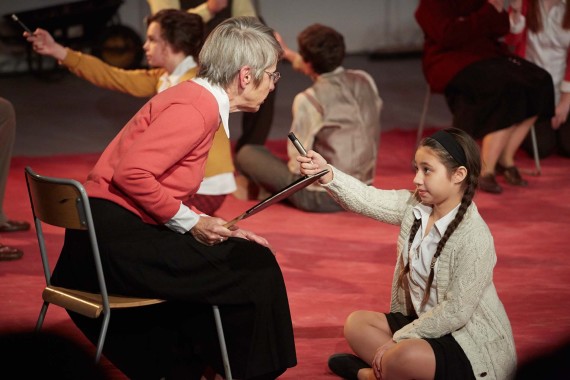
- The London Bubble was set up in 1972 by the Greater London Arts Association under Glen Walford, Peter Coe, Bob Carlton, Bob Eaton, Peter Rowe and Jonathan Petherbridge. Te London Bubble believes that it brings people together to create, participate in and enjoy theatre.
- Their mission statement is to provide the artistic direction, skills, environment and resources to create inspirational, inclusive, involving theatre.
- They run a number of theatre groups based in Rotherhithe open to people aged six and over, giving weekly opportunities for a wide range of people to make theatre together, assisted by experienced theatre practitioners and other specialists.
- Inclusion is at the heart of what they do, and their facilities are hugely accessible.
- Some groups that are run by the London Bubble include: 'The Tea Break Theatre' which includes having tea, cake and a chat, followed by a 'gentle' workshop to tell stories and share laughter. This group is free to attend and is welcoming/inclusive. 'The Rotherhithe Shed' is a partnership project between London Bubble and Time and Talents and aims to bring together older men and women to put their practical skills to good use, as well as 'Young Theatre Makers' which involves part time training for young people not in education or employment.
- 1,500 people take part in their projects every year.
- Since 2,000 the London Bubble has delivered 12 'open projects'. These open projects have involved people openly and let the artistic aspiration signal be 'open'. Some of these open projects have been outdoors, site specific, promenade, scripted, verbatim, devised but all with the idea that they have a company of performers aged between 7-70 to promote the idea of intergenerational work, something they believe is hugely important. This practice largely occurs in Southwark, running adult, children and young people's classes.
- London Bubble also runs a national primary school drama intervention which aims to support children with learning or communication barriers, ultimately improving their confidence and wellbeing.
- In the 1970s, they wanted to target people who wouldn't normally have the access to the theatre, with an emphasis on the informality, fun, laughter, music and excitement with theatre. From 1972-83, it became a summer touring company. From 1983 it became more established, still touring, but also extended it's work throughout the year helping people developing their skills.